Sakuraoka Daijingu is a shrine in Sendai associated with Date Masamune.
First of all, this shrine is located in a beautiful setting surrounded by nature, including the Hirose River and Aobayama. It is also well known as a shrine with a long history where many blessings can be received, which is why I had been interested in visiting it for quite some time.
After visiting Zuihoden, I took a relaxing walk through Aobayama Park, which is so rich in nature that it’s hard to believe it’s in central Sendai.
Then, I headed to the ruins of Sendai Castle (Aoba Castle), built by Date Masamune, and strolled around while taking in the sense of history. Finally, I visited this shrine located near the castle ruins.
When I arrived at the shrine, my first impression was the beautifully maintained approach, which was very striking. I was able to pay my respects in a pleasant atmosphere that felt quite different from everyday life.
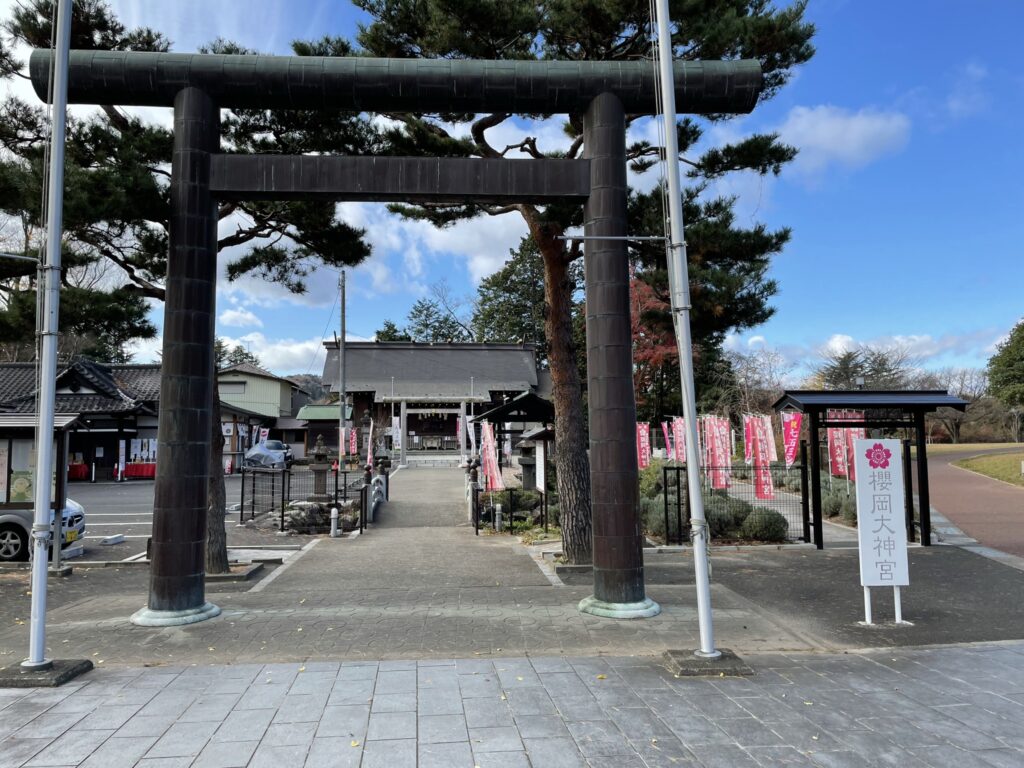
When sightseeing in Sendai, you often hear the names Sakuraoka Daijingu, the Sendai Castle ruins, Aobayama Park,Zuihodenmany of which are sites connected to Date Masamune.
In fact, these are not separate tourist spots; they are all deeply connected within the city of Sendai, which was built by Date Masamune.
It all begins with the Sendai Castle ruins (Aoba Castle). Date Masamune built his castle here, making it the political center, a military stronghold, and the core of the castle town—the heart of Sendai.
Sendai Castle is located within Aobayama Park.
This is not just an ordinary park; it is surrounded by mountains (Mt. Aoba) and a river (the Hirose River).
In other words, Aobayama Park served as a natural fortress surrounding the castle, where the terrain itself functioned as its defense.
Then there is the shrine that protects the city and its people.
Date Masamune invited the deity of Ise Grand Shrine (Amaterasu Omikami) and established this shrine.
Its purpose was to protect the castle and the castle town, ensure the stability of people’s lives, and pray for the prosperity of the domain.
In other words, the shrine was established to serve as a form of “spiritual protection.”
Zuihoden, meanwhile, is the resting place of Date Masamune—his mausoleum.
While he was alive, his base was Sendai Castle; after his death, it became Zuihoden. In that sense, Zuihoden represents the final destination of his life.
Through these relationships, Sendai Castle (politics) + Aobayama (natural defense) + the shrine (faith) + Zuihoden (spiritual presence) together form a unified space designed by Masamune—integrating the city, faith, and the afterlife into a single concept.
Table of Contents
Access
1-1 Sakuragaoka Park, Aoba Ward, Sendai City, Miyagi Prefecture
[By Train]
A 1-minute walk from the West Exit 1 of Omachi Nishi-Koen Station on the Tozai Subway Line.
[On Foot]
About a 30-minute walk from Sendai Station.
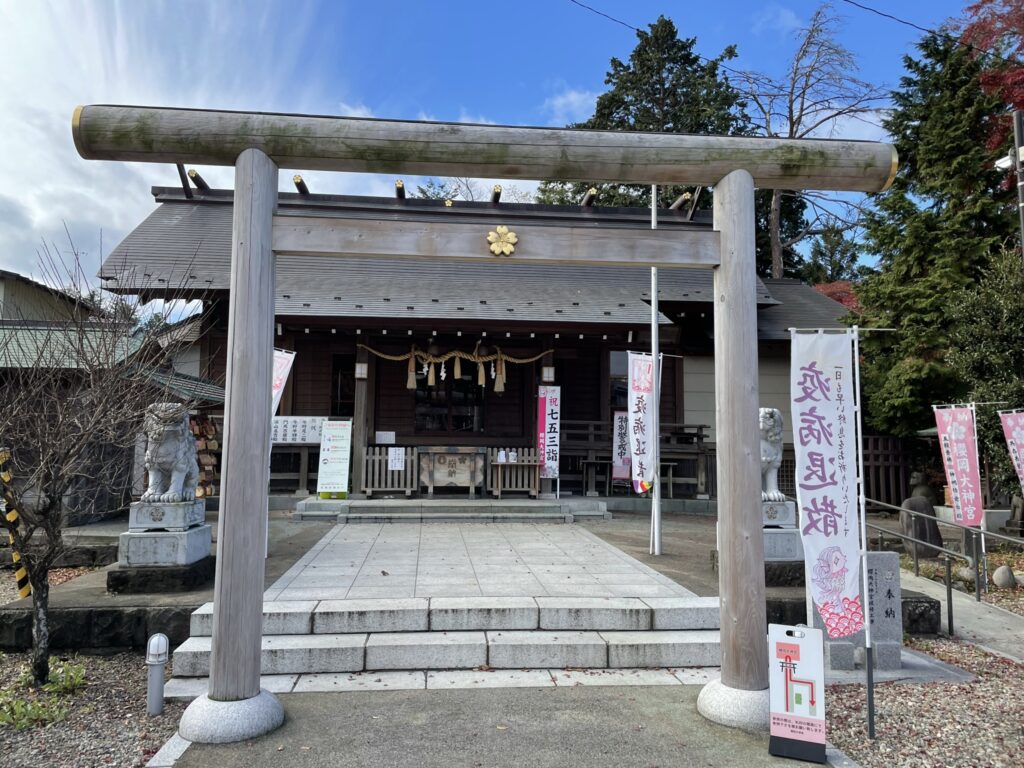
History & Blessings
[History]
This shrine was founded in 1621 (Genna 7) by Date Masamune, the first lord of the Sendai Domain.
A divided spirit (bunrei) from Ise Grand Shrine was enshrined, and the shrine was originally established in the Aramaki area under the name “Isedoyama.” It was deeply revered by the Date family, with successive feudal lords visiting the shrine upon their succession. The shrine buildings were even constructed with public funds, indicating its special status.
Later, in 1872 (Meiji 5), it was relocated to a scenic area overlooking the clear stream of the Hirose River (within what is now Nishi Park). It was then moved again in 1926 (Taisho 15) to its current location, where it remains today.
[Enshrined Deities and Blessings]
This shrine enshrines a total of eighteen deities, including Amaterasu Omikami and Toyouke Omikami.
Amaterasu Omikami is the deity who gives life to all and protects people with a great, sun-like compassion.
Toyouke Omikami is worshipped as a deity deeply connected to daily life, governing food, clothing, and shelter, including rice.
In addition, the shrine enshrines deities associated with various blessings such as:
Protection from misfortune and disasters
Family harmony
Business prosperity
Recovery from illness
Safety in construction work
Protection of fire and the hearth
Success in studies
Because of these wide-ranging blessings, the shrine is cherished as a place where many kinds of wishes can be fulfilled.
festival
【[Donto Festival (January 14)]】
The “Donto Festival,” held on January 14, is a traditional event where New Year’s decorations, as well as talismans and amulets that protected you over the past year, are ritually burned.
Once the piled-up decorations in the shrine grounds are set alight, the flames rise powerfully, illuminating the night sky. A magical scene unfolds as many visitors gather around the fire.
People warm themselves by the strong flames while praying for good health and protection from illness throughout the year.
[Setsubun Festival (February 3)]
During the Setsubun Festival, a large tower (yagura) is built within the shrine grounds, and people who are considered lucky for that year (men and women born in the corresponding zodiac year) perform a bean-throwing ceremony.
With the chant “Fortune in, demons out,” it is a lively event that invites good luck.
In addition to beans, rice cakes and sweets are also thrown, and visitors can take home whatever they catch.
The shrine grounds are filled with people, creating a joyful and energetic atmosphere.
[Cherry Blossom Viewing at Nishi Park (During the Blooming Season)]
Nishi Park is one of Sendai’s most famous cherry blossom spots, and in spring, the fully blooming sakura delight all who visit.
この時期は、多くの参拝者が訪れ、境内は華やかな雰囲気に包まれます。
Limited-edition goshuin (temple stamps) are also distributed, making it an especially lively time of year.
In the gentle spring air, visitors can enjoy a refreshing and uplifting experience for both body and mind.
[Nagoshi no Oharae (June 30)]
Nagoshi no Oharae is a Shinto purification ritual held to cleanse the impurities accumulated over the first half of the year.
Participants recite the Oharae prayer together and undergo purification using paper dolls (katashiro) and ritual offerings.
They also pass through a large ring made of reeds (chinowa) to purify both body and mind and pray for safety during the remaining half of the year. The sight of people quietly proceeding through the shrine grounds in unison is both solemn and deeply moving.
[Grand Festival (Third Sunday of October)]
The Grand Festival is the most important event for the shrine, transforming the grounds into a lively and festive space.
On this day, visitors can see portable shrines (mikoshi), which are not usually on display, as well as various vibrant rituals and celebratory performances.
It is a special day for the local community, attracting many visitors and creating a bustling, celebratory atmosphere.
Goshuin (shrine stamp)
At the shop within the shrine grounds, there was such a wide variety of amulets and goods on display that it was hard not to be tempted by all of them, and everything was beautifully and carefully arranged. Even the orderly way they were displayed conveyed how thoughtfully they were handled, making it a calming space just to look around in.
There were six different goshuin books available in total, ranging from simple and elegant white and black designs to more elaborate ones decorated with a cherry blossom crest. In particular, the pink, gold, green, and black goshuin books with mirror-like decorations were especially beautiful and striking, as their appearance changed depending on the light. It was also nice to be able to choose one according to your own taste.
There was also an extremely wide variety of amulets. In addition to classic ones such as health amulets, traffic safety amulets, safe childbirth amulets, academic success amulets, protection from misfortune amulets, travel safety amulets, victory amulets, work amulets, and recovery-from-illness amulets, there were also many unique and adorable ones that made you want to pick them up, such as the “Chakkoi Mamori,” “Otakara Mamori,” “Tonbodama Mamori,” and the “Big Good-Luck Beckoning Amulet.” There were also many amulets with uplifting names, such as matchmaking amulets, the “Sakura Bloom Amulet,” the “Make Your Wish Come True Eggplant Amulet,” and the “Clear Your Heart Amulet,” making it hard to decide which one to choose.
In addition to amulets, there was also a full selection of shrine talismans, plaques for business prosperity and household safety, workplace safety talismans, prayer ema plaques, and ofuda stands, which was another appealing point since you could choose something that matched your wishes after praying. Overall, many of the designs were cute and had a gentle, comforting atmosphere, which also left a strong impression.
Among them, the one that stood out the most was the “Clear Your Heart Amulet.” This amulet is scheduled to be available again from January 2026, and it is characterized by its beautiful, translucent design. When it catches the light, it sparkles beautifully and has a charm that brightens your mood just by looking at it. Another nice feature is that you can choose the color of the cord from nine different options, allowing you to have a special amulet that feels uniquely your own.
When I actually saw it in person, I could immediately understand why it is so popular. It was so attractive that I felt it would be appreciated not only as a keepsake of your visit, but also as a souvenir for someone special. If you visit Sakuraoka Daijingu, I highly recommend taking your time to carefully choose your favorite one.
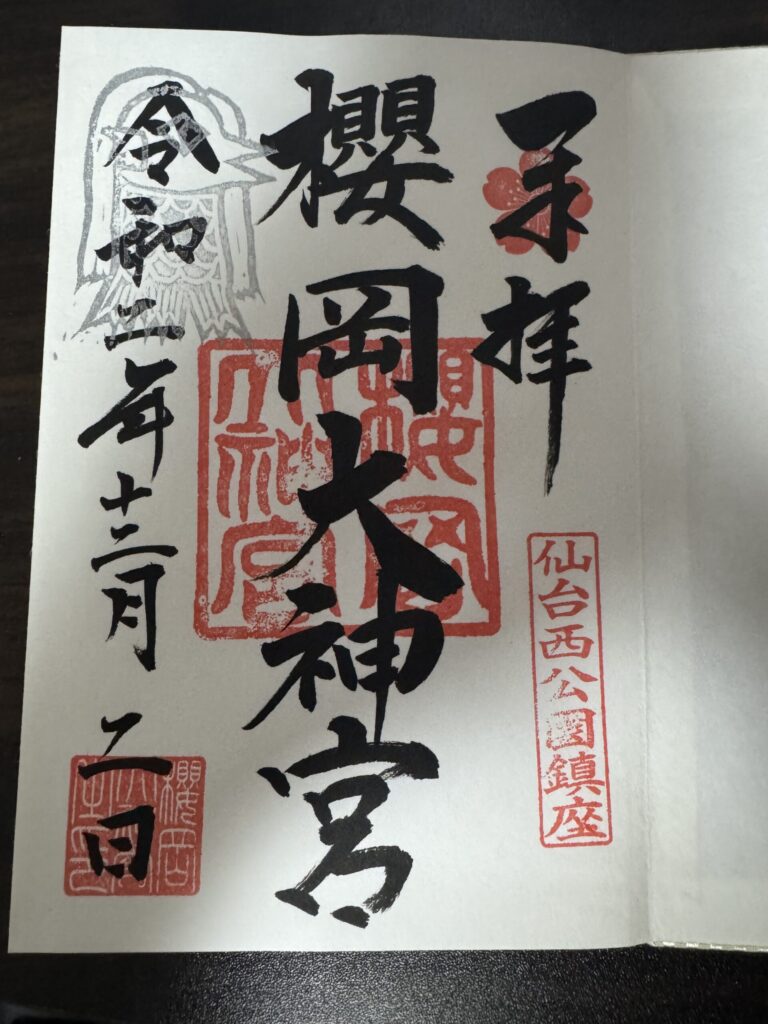
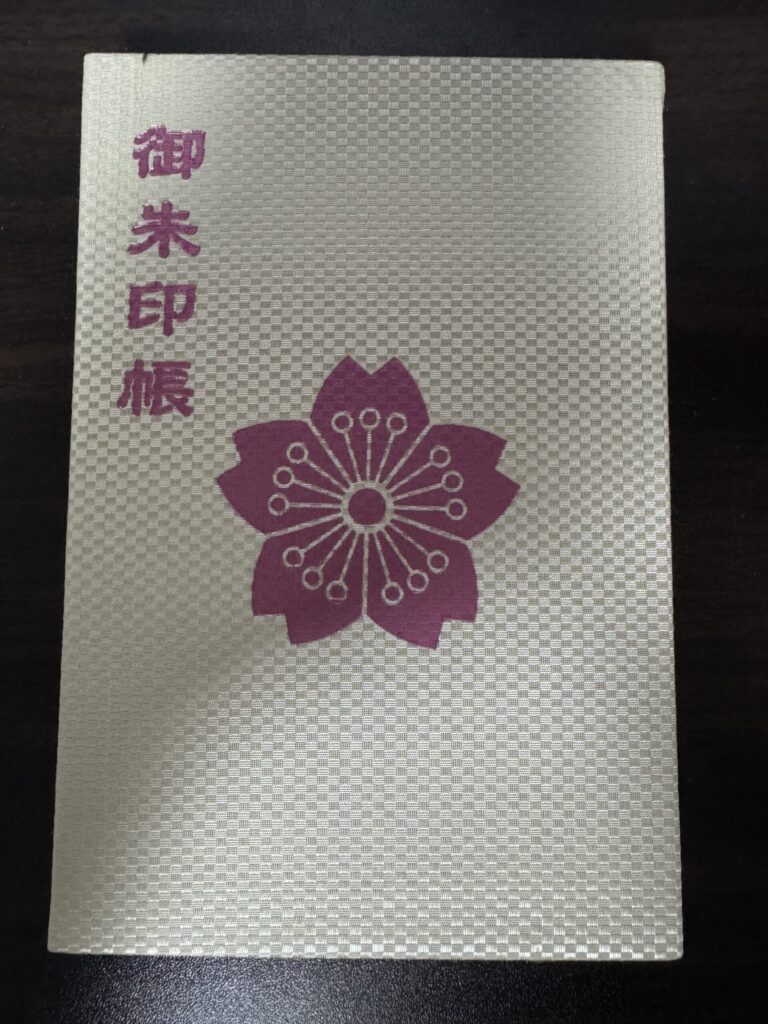
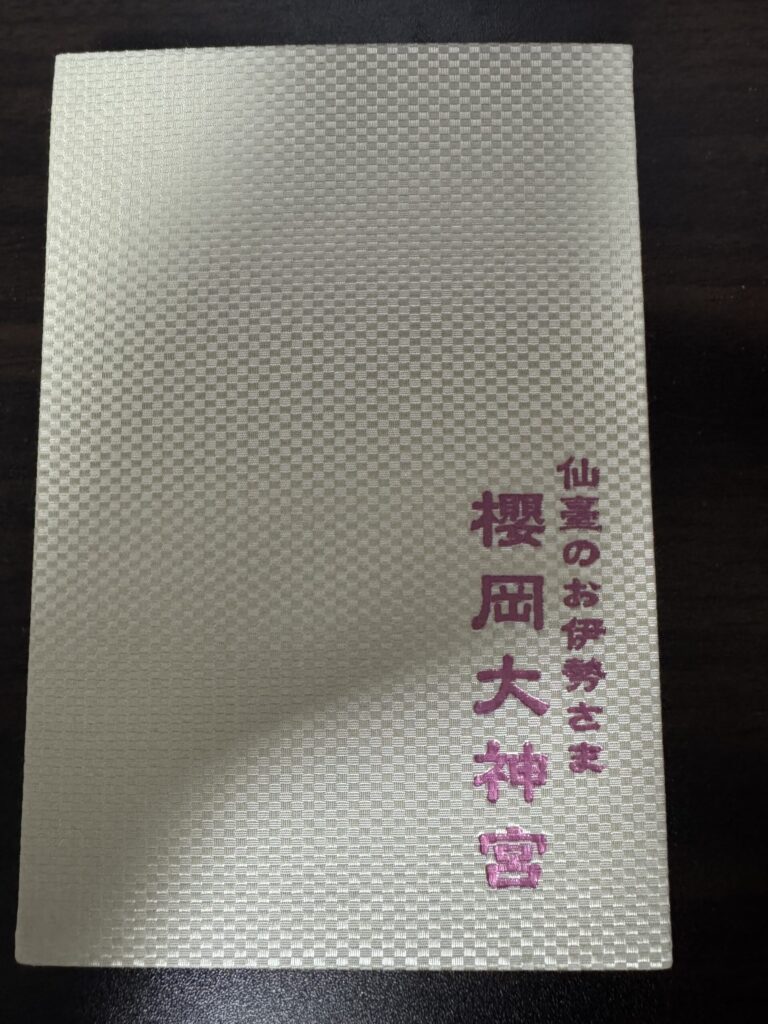
Since I didn’t have a goshuin book with me, I bought one there. It’s a cute goshuin book with a cherry blossom design
impressions
Sakuraoka Daijingu, the Sendai Castle ruins, Aobayama Park, and Zuihoden—well-known sightseeing spots in Sendai—may seem like separate places, but they are actually closely connected within the city of Sendai, which was built by Date Masamune. Centered around Sendai Castle, the area was designed with natural terrain for defense, shrines placed around it, and his mausoleum located nearby, creating a unified structure that integrates politics, faith, and the spiritual world. By understanding this background while exploring, you can experience Sendai’s history on a much deeper level rather than just as a typical sightseeing trip.
Since this area represents “Date Masamune’s worldview itself,” I think you’ll enjoy it even more if you explore the surrounding area as well.