After visiting Zuihoden, I took a relaxing walk through Aobayama Park, which is so rich in nature that it’s hard to believe it’s in central Sendai.
Then I headed to the ruins of Sendai Castle (Aoba Castle), built by Date Masamune, and strolled around while taking in the sense of history.
Finally, I visited Sakuraoka Daijingu, which is located near the castle ruins.
The beautifully maintained approach to the shrine was very impressive, and I was able to pay my respects in a pleasant, serene atmosphere.
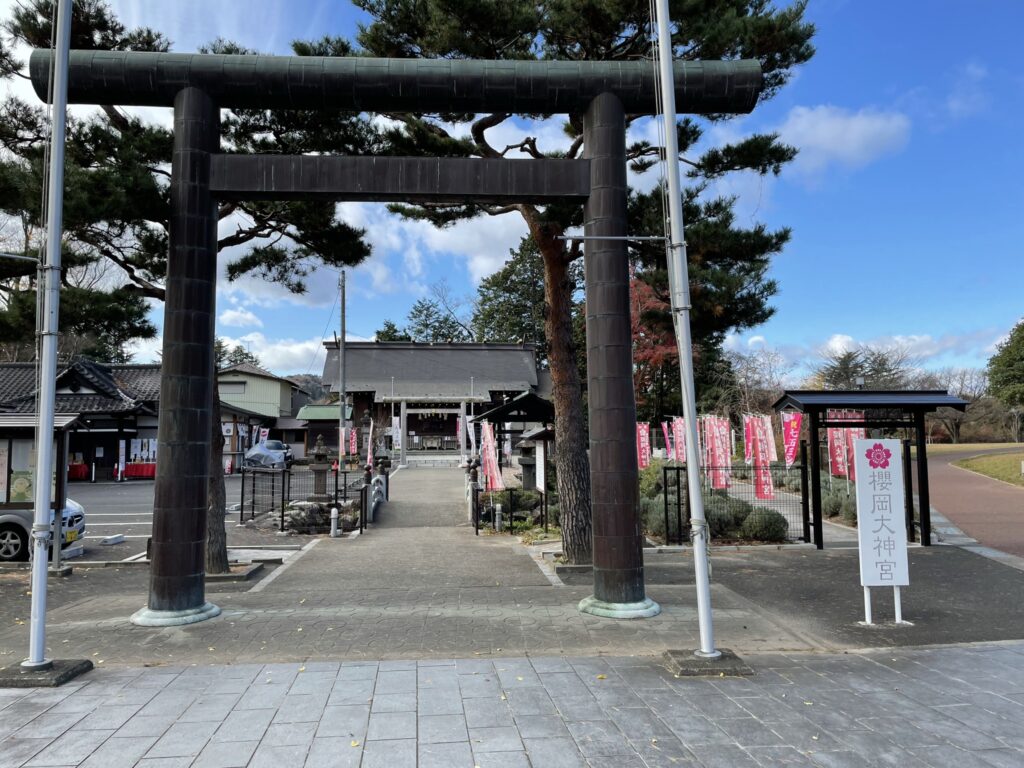
When sightseeing in Sendai, you often hear the names
Sakuraoka Daijingu, Sendai Castle ruins (Aoba Castle), Aobayama Park, and Zuihoden.瑞鳳殿。Zuihoden
In fact, these are not separate tourist spots—they are all deeply connected within the city of Sendai, which was built by Date Masamune.
It all begins with the Sendai Castle ruins (Aoba Castle). Date Masamune built his castle here, making it the political center, a military stronghold, and the core of the castle town—the heart of Sendai.
Sendai Castle is located within Aobayama Park.
This is not just an ordinary park; it is surrounded by mountains (Mt. Aoba) and a river (the Hirose River).
In other words, Aobayama Park served as a natural fortress surrounding the castle, where the terrain itself functioned as its defense.
Sakuraoka Daijingu, on the other hand, is a shrine that protects the city and its people.
Date Masamune invited the deity of Ise Grand Shrine (Amaterasu Omikami) and established this shrine.
Its purpose was to protect the castle and the castle town, ensure the stability of people's lives, and pray for the prosperity of the domain.
In other words, Sakuraoka Daijingu was created to serve as a form of “spiritual protection.”
Zuihoden is the resting place of Date Masamune—his mausoleum. While he was alive, his base was Sendai Castle; after his death, it became Zuihoden. In that sense, Zuihoden represents the final destination of his life. Through these relationships, Sendai Castle (politics) + Aobayama (natural defense) + Sakuraoka Daijingu (faith) + Zuihoden (spiritual presence) together form an integrated space designed by Masamune—combining the city, faith, and the afterlife into one unified concept.
Table of Contents
Access
1-1 Sakuragaoka Park, Aoba Ward, Sendai City, Miyagi Prefecture
[By Train]
1-minute walk from the West Exit 1 of Omachi Nishi-Koen Station on the Tozai Subway Line.
[On Foot]
About a 30-minute walk from Sendai Station.
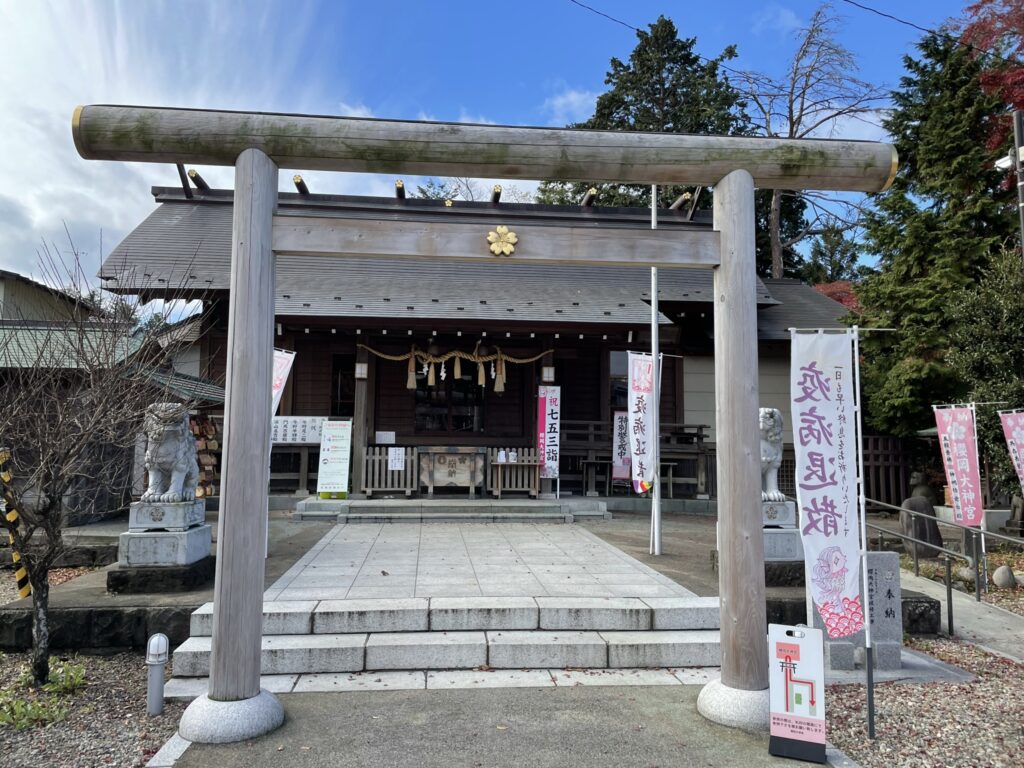
History & Blessings
[History of Sakuraoka Daijingu]
Sakuraoka Daijingu was founded in 1621 (Genna 7) by Date Masamune, the first lord of the Sendai Domain.
A divided spirit (bunrei) from Ise Grand Shrine was enshrined, and the shrine was originally established in the Aramaki area under the name “Isedoyama.” It was deeply revered by the Date family, with successive feudal lords visiting the shrine upon their succession. The shrine buildings were even constructed with public funds, indicating its special status.
Later, in 1872 (Meiji 5), it was relocated to a scenic area overlooking the clear stream of the Hirose River (within what is now Nishi Park). It was then moved again in 1926 (Taisho 15) to its current location, where it remains today.
[Enshrined Deities and Blessings]
Sakuraoka Daijingu enshrines a total of eighteen deities, including Amaterasu Omikami and Toyouke Omikami.
Amaterasu Omikami is the deity who gives life to all and protects people with a great, sun-like compassion.
Toyouke Omikami is worshipped as a deity deeply connected to daily life, governing food, clothing, and shelter, including rice.
In addition, the shrine enshrines deities associated with various blessings such as:
Protection from misfortune and disasters
Family harmony
Business prosperity
Recovery from illness
Safety in construction work
Protection of fire and the hearth
Success in studies
Because of these wide-ranging blessings, the shrine is cherished as a place where many kinds of wishes can be fulfilled.
festival
【[Donto Festival (January 14)]】
The “Donto Festival,” held on January 14, is a traditional event where New Year’s decorations, as well as talismans and amulets that protected you over the past year, are ritually burned.
Once the piled-up decorations in the shrine grounds are set alight, the flames rise powerfully, illuminating the night sky. A magical scene unfolds as many visitors gather around the fire.
People warm themselves by the strong flames while praying for good health and protection from illness throughout the year.
[Setsubun Festival (February 3)]
During the Setsubun Festival, a large tower (yagura) is built within the shrine grounds, and people who are considered lucky for that year (men and women born in the corresponding zodiac year) perform a bean-throwing ceremony.
With the chant “Fortune in, demons out,” it is a lively event that invites good luck.
In addition to beans, rice cakes and sweets are also thrown, and visitors can take home whatever they catch.
The shrine grounds are filled with people, creating a joyful and energetic atmosphere.
[Cherry Blossom Viewing at Nishi Park (During the Blooming Season)]
Nishi Park is one of Sendai’s most famous cherry blossom spots, and in spring, the fully blooming sakura delight all who visit.
During this season, many worshippers also come to Sakuraoka Daijingu, and the shrine grounds are enveloped in a festive atmosphere.
Limited-edition goshuin (temple stamps) are also distributed, making it an especially lively time of year.
In the gentle spring air, visitors can enjoy a refreshing and uplifting experience for both body and mind.
[Nagoshi no Oharae (June 30)]
Nagoshi no Oharae is a Shinto purification ritual held to cleanse the impurities accumulated over the first half of the year.
Participants recite the Oharae prayer together and undergo purification using paper dolls (katashiro) and ritual offerings.
They also pass through a large ring made of reeds (chinowa) to purify both body and mind and pray for safety during the remaining half of the year. The sight of people quietly proceeding through the shrine grounds in unison is both solemn and deeply moving.
[Grand Festival (Third Sunday of October)]
The Grand Festival is the most important event for the shrine, transforming the grounds into a lively and festive space.
On this day, visitors can see portable shrines (mikoshi), which are not usually on display, as well as various vibrant rituals and celebratory performances.
It is a special day for the local community, attracting many visitors and creating a bustling, celebratory atmosphere.
Goshuin (shrine stamp)
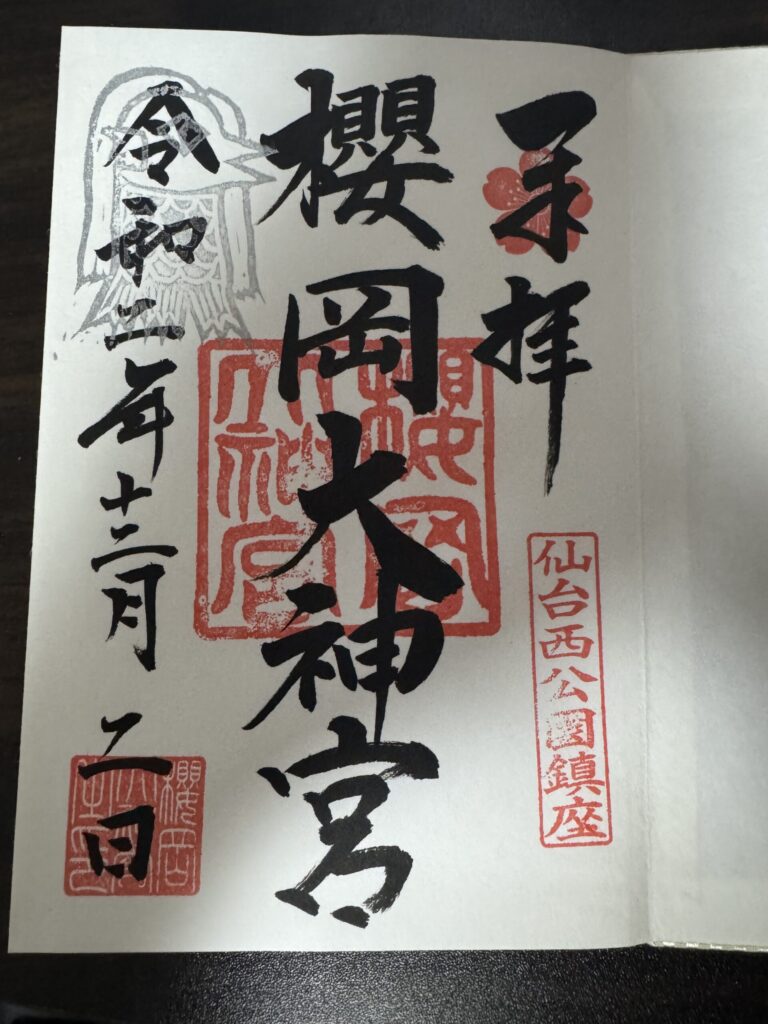
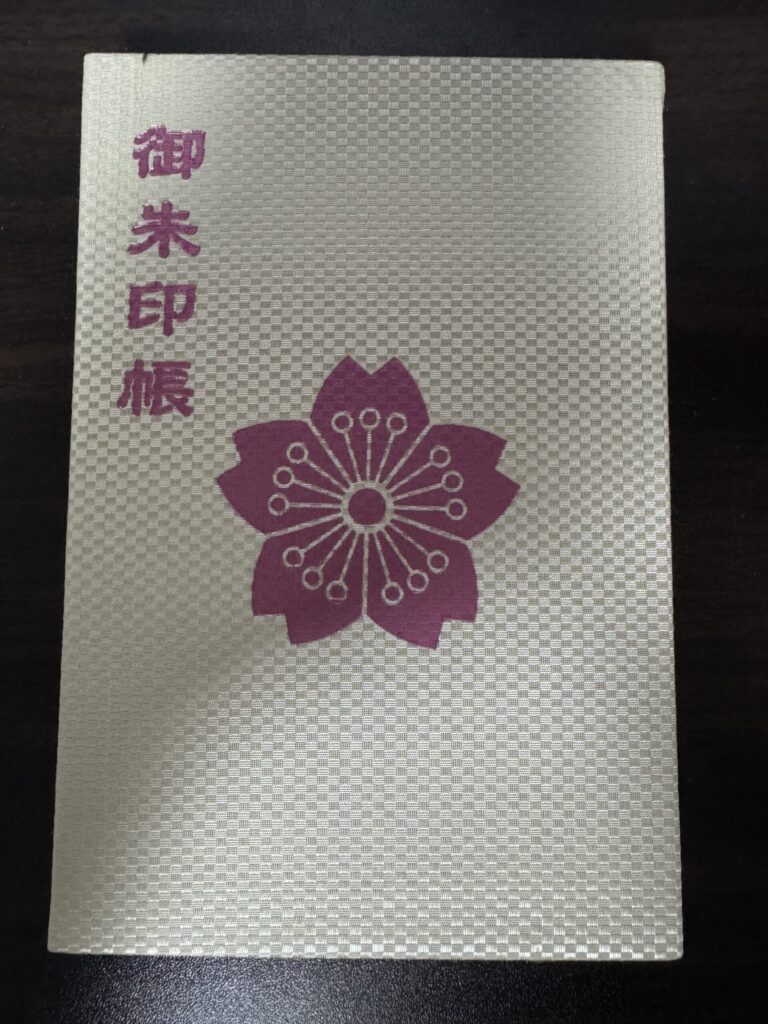
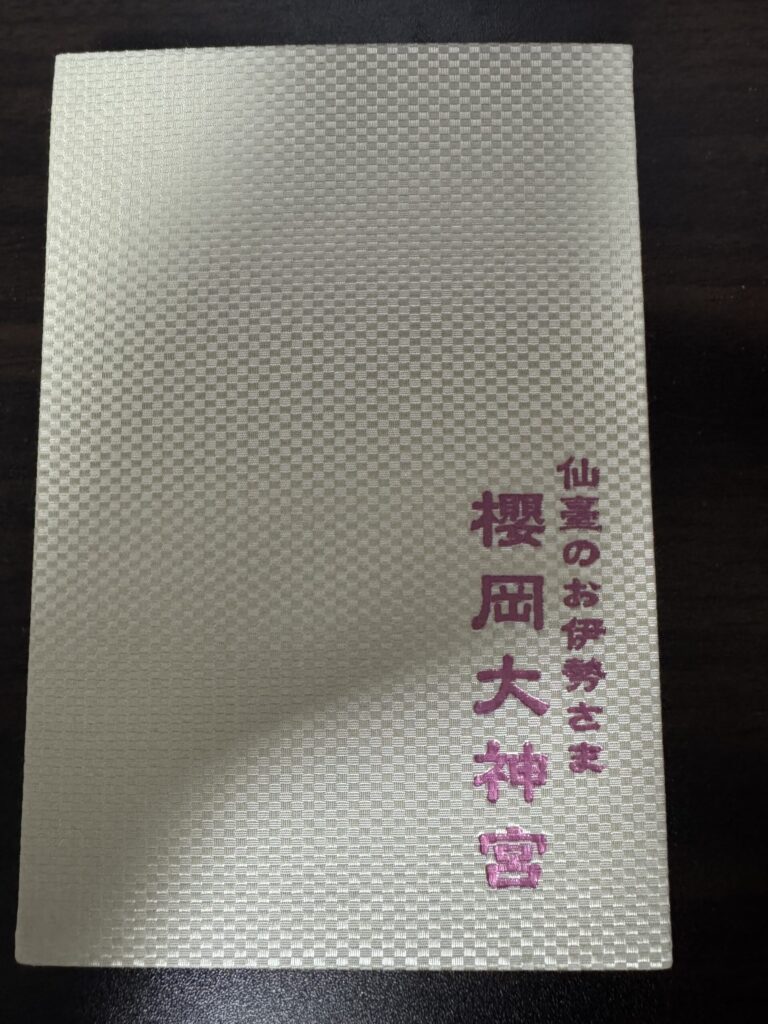
Since I didn’t have a goshuin book with me, I bought one there. It’s a cute goshuin book with a cherry blossom design
impressions
Sakuraoka Daijingu, the Sendai Castle ruins, Aobayama Park, and Zuihoden—well-known sightseeing spots in Sendai—may seem like separate places, but they are actually closely connected within the city of Sendai, which was built by Date Masamune. Centered around Sendai Castle, the area was designed with natural terrain for defense, shrines placed around it, and his mausoleum located nearby, creating a unified structure that integrates politics, faith, and the spiritual world. By understanding this background while exploring, you can experience Sendai’s history on a much deeper level rather than just as a typical sightseeing trip.
This area represents “Date Masamune’s worldview itself,” so I think you’ll enjoy it even more if you explore not only Sakuraoka Daijingu but also the surrounding area as well